

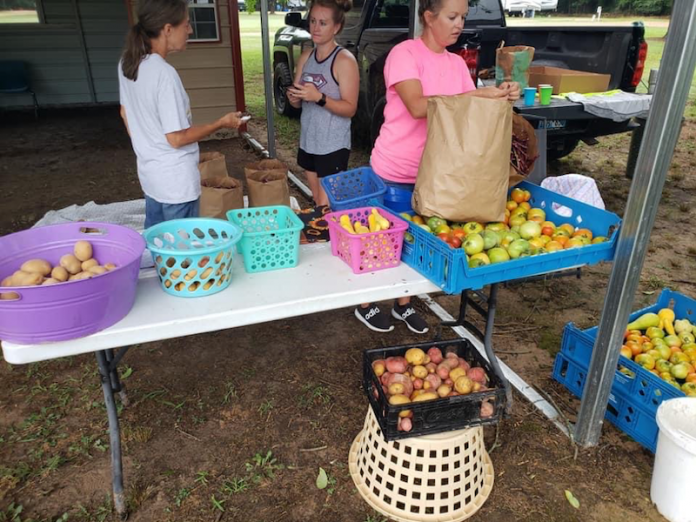
After being a part of a local public health assessment, one small town convenience store owner was inspired to bring more fresh fruits and vegetables to her community. After a relationship developed over time with community partners, the changes have become good for business and self-sustaining.

How did you develop this idea?
In 2017, TSET Healthy Living Program (HLP) staff completed a FAMS (Food Accessibility Market Survey) with a small town convenience store located in Rattan (Pushmataha County). The store is 12 miles from the main grocery store. During the FAMS, the owner expressed wanting to have healthier items in her store and a farmer’s market, but she was not able to work on this effort at the time due to her health.
In 2019, through TSET HLP staff’s continued relationship with the store owner, this effort was revisited. The store owner agreed to donate a covered pavilion for the farmer’s market next to her store. TSET HLP staff purchased approved signage for the farmer’s market and helped to promote the market by putting out flyers and sharing on Facebook.
The market opened the first weekend of June 2020 and has been selling out every weekend. We are excited to provide fruits and vegetables to our rural community.
How much did it cost? How much staff time or volunteer effort did it take? What other partners were engaged as part of this project’s success?
TSET provided the signage, which cost about $325, and the owner donated the building. TSET HLP met with the store owner several times as well as the City Council of Rattan to make sure all codes were followed regarding signage. TSET HLP staff also provided material to the store owner about farmer’s market regulations.

How did this move your work plan forward?
We increased the availability of fruits and vegetables in low socioeconomic status (SES) communities. The store owner also now has some fruits and vegetables in her store which improved her FAMS score. This helped to count as part of the TSET Healthy Living Program’s objective.
Where are you planning to take this idea in the future?
TSET HLP will continue to be supportive and visit the store owner to keep this relationship. The farmer’s market is now sustainable and TSET HLP does not have continued involvement at this time.
Questions?
To learn more about this community effort, or to get involved, contact Mellissa Humphrey of the Pushmataha Health Department.
E-mail: Mellissagh@health.ok.gov
Enjoyed this story? Have your own success story to share?
Take a few minutes to submit your story to be featured on OK In the Know, and bring light to policies, practices and programs that are making Oklahoma communities healthier! Fill out a handful of simple questions in the “Bright Spots” form (TSET grantees: please use this version) to describe what was done, how the idea was developed, and lessons learned! Click here to learn more about how to have your community health initiative featured in the “Oklahoma Spotlight” section of this site.




Nicely done! Love this collaboration & outcome.